— DeepTech AI Engineering · Sovereign AI · Malta EU

Built To Last.

Less time searching. Faster decisions. Fewer manual handoffs. We build production AI for demanding workflows, sensitive data, and teams who need it to work. Start with a real problem. Prove the value. Then scale.

NVIDIA Inception Program

RetroGradient Labs is a member of the NVIDIA Inception program.

Accepted into NVIDIA's global startup program.

01 · NO DATA02 · UNSTRUCTUREDDATA03 · STRUCTUREDDATA04 · AI POCAI-READYWherever you are todayNo matter your stage, we'll help make you AI-ready.01 · NO DATA02 · UNSTRUCTURED DATA03 · STRUCTURED DATA04 · AI POCAI-READYWherever you are todayNo matter your stage, we'll help make you AI-ready.

What could change

Less friction.
More useful work.

A clearer answer. An earlier warning. A smoother handoff. Start with the improvement your team needs.

Knowledge & documents

Find the answer. Keep the source.

Turn time spent searching into answers your team can check and use.

See an example
Today

A policy question becomes a search through shared drives, old emails, and colleagues' memories.

With GRIMOIR

Ask in plain language. Get a cited answer from the approved library, with access permissions intact.

Start with an approved document collection and the questions your team asks most often.

Explore knowledge workflows
Visual intelligence

See what matters. Understand it sooner.

Turn existing camera feeds into useful signals about movement, activity, safety, vehicles, and physical spaces.

See an example
Today

Useful events and patterns are buried across hours of video, noticed late, or reconstructed after the fact.

With BEHOLDR

Interpret existing camera feeds in real time, surface relevant events and patterns, and route the result where it is useful.

Start with one high-value question, a defined set of feeds, and a measurable operational outcome.

Explore visual intelligence workflows
Workflows & integration

Fewer handoffs. More useful work.

Prepare the next step automatically, with people in charge of the decisions.

See an example
Today

A request arrives by email. Someone rekeys it, checks attachments, and chases the next approval.

With CUSTOM

Extract the useful information, prepare the next step in your existing system, and flag exceptions for review.

Map a bounded process, check the data, and agree which decisions stay with a person.

Explore a bespoke workflow

Potential applications. We test the value with you in your environment.

Find your starting point
How we work

From problem
to production.

Don't know where AI fits? We find it. Data not ready? We fix it. Ready to deploy? We build it. The engineers who help define the solution are the people responsible for making it work.

01

Find the
opportunity

Map the workflow, understand the friction, and check the data. Agree what a useful improvement would look like before choosing the technology.

02

Prove it
in a pilot

Start with a bounded workflow and agreed success criteria. Compare the result with how your team works today, then decide whether to continue.

03

Deploy it
safely

Integrate with your systems. Keep data, permissions, and human review under control, with deployment requirements agreed from the start.

04

Keep it
working

Plan monitoring, maintenance, and ownership before launch. Improve the system as your workflows change, with a clear path for support.

Sovereignty and governance are built into every stage.

See how a pilot works →

What we build

The tools behind
the improvement.

Find knowledge. Understand your space. Connect your systems. Choose the starting point that fits.

Ask your documents.
Get cited answers.

Cited answers from your policies, contracts, and team knowledge. Access rules stay in place; sensitive documents stay under your control.

Explore GRIMOIR →
An answer with a source.Approved knowledge, ready to inspect.

Useful AI.
Under your control.

Your environment
On-premises or EU-hosted deployment, shaped around your data and operating requirements.
Clear permissions
Access controls that respect who should see each document, feed, and result.
Human oversight
Review checkpoints for important decisions, with sources and audit trails to inspect.
Engineers involved
The people scoping the solution stay responsible for how it works in practice.
Founders

Currently in active engagement with Maltese government and private sector organisations.

Built by
Engineers First.

RetroGradient Labs was founded by two engineers who have spent nearly a decade building production AI for businesses that needed it to actually work. We started this company because the gap between AI promises and AI products keeps widening, and the only way to close it is to build properly from the ground up.

Natalia Mallia,  Co-Founder · CEO
Natalia Mallia
Co-Founder · CEO

Natalia is a Maltese AI engineer with eight years of experience building AI that actually ships, in factories, classrooms, and creative studios. She holds an MSc in Artificial Intelligence from the University of Malta, speaks at NVIDIA's flagship developer conference, and was recognised across three categories at Malta's Best Businesswoman Awards 2025. At RetroGradient Labs she leads strategy, client relationships, and product, with one rule: AI is only useful if it's trustworthy enough to put into production.

NVIDIA GTC Speaker
SiGMA Featured Speaker
Responsible & ethical AI, hands-on
Malta's Best Businesswoman Awards 2025 · 3 categories
Adrian Apap,  Co-Founder · CTO
Adrian Apap
Co-Founder · CTO

Adrian is a Maltese AI engineer with over half a decade of hands-on experience building and shipping AI systems at scale, from real-time camera analytics on edge devices to AI-powered tools and automated trading systems. He holds an MSc in Artificial Intelligence from the University of Malta and is a peer-reviewed AI researcher, co-first author of a 2024 paper in Springer's Neural Computing and Applications on explainable, adversarially robust computer vision. At RetroGradient Labs he leads the technical vision with a builder's mindset and a deep conviction that robust, production-grade AI is what separates great ideas from lasting products.

Peer-Reviewed AI Researcher
Edge AI & Jetson Specialist
MLOps & Production Systems
Quantitative Research Background
Research & Insights

Research & Insights.

Not a blog. A body of work. Engineering depth, conference stages, and peer-reviewed research from the founders, in one place.

Benchmark, GPU

GPU benchmarking in production

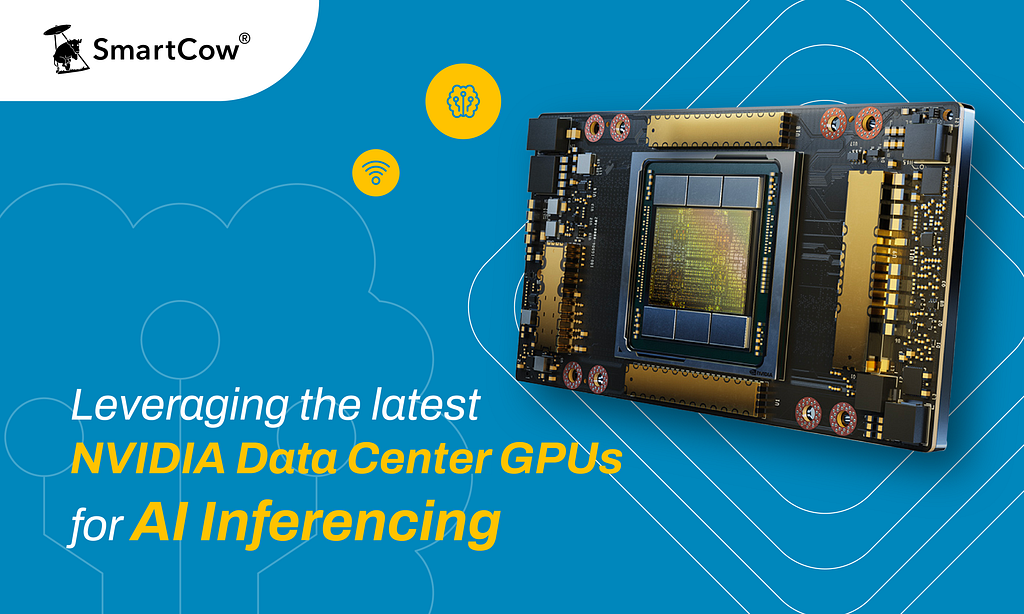
Benchmarking the NVIDIA A2, A10, A40, A100, L4, L40, and H100 across a real production video-inference pipeline (PeopleNet, FaceDetect, face-mask classification). Practical findings on tracker choice, interval values, and where decoders become the true bottleneck.

Originally on Medium, 2023. Adrian Apap, co-author.
Read on Medium →
Ongoing Writing

Responsible AI, beyond the hype

Strategic takes on where AI hype meets engineering reality: LLM limitations, the gap between trustworthy AI and AI marketing, responsible deployment in regulated sectors, and what enterprises actually need before adopting generative systems.

Curated on LinkedIn, ongoing.
Read on LinkedIn →
Peer-Reviewed Journal

Explainable vision for biometrics

A learning-free, hierarchical computer-vision approach to biometric identification on retina and palmprint images. Achieves perfect classification on the VARIA and RIDB retina datasets and 97.54% accuracy on the IITD palmprint dataset, while remaining robust to decision-based black-box adversarial attacks and to partial matching at 80% image visibility.

Neural Computing and Applications, Springer, 2024. Open access. Adrian Apap, co-first author.
Read the paper →

Before you start

Good questions.
Clear answers.

What to expect, what to bring, and how we decide whether the work is worth doing.

Talk through your use case →
We know something needs to improve. Do we need an AI brief?

No. Bring the workflow, the frustration, or the question you keep coming back to. We help identify where AI could be useful and whether your data and systems can support it. A clear problem is a better starting point than a chosen model.

How do we choose between GRIMOIR, BEHOLDR, and custom work?

GRIMOIR helps teams find and use internal knowledge. BEHOLDR turns camera feeds into operational signals. Custom engineering covers workflows and integrations that need a tailored approach. Tell us what you want to improve and we will help you find the right fit.

Can we test the value before committing to a full build?

Yes. We start with a bounded discovery or pilot, agree the workflow and success criteria, and compare the result with how things work today. The decision at the end can be to scale, revise, or stop. A pilot is a way to make that decision with evidence.

How a pilot works →
What will it cost, and how long will it take?

That depends on the workflow, data readiness, integrations, and deployment requirements. Discovery defines the work so we can agree scope, fees, deliverables, and timing before it starts. A production build is a separate decision after the pilot has been evaluated.

What if our data is scattered or our systems are older?

That is part of discovery. We assess what is available, what needs cleaning or organising, and which connections are practical. You do not need to replace everything to explore a useful workflow; we scope the preparation and integration work explicitly.

Can our data stay on infrastructure we control?

Yes. We support on-premises and private or sovereign EU-hosted deployments. We agree the data path, access rules, retention, and review requirements with your technical and governance teams before choosing the setup.

Explore deployment and governance →
Are these use cases results from client projects?

These use cases reflect workflows we have the engineering capability and prior delivery experience to implement. They are informed by systems and projects our team has worked on previously, as well as the operational patterns where we know AI can produce measurable value. Where RetroGradient client outcomes are available and we have permission to share them, we will publish those separately with the relevant metrics and evaluation context.

What happens after we get in touch?

An engineer responds within 24 hours. We clarify the problem, discuss whether there is a fit, and suggest a concrete next step. You do not need a technical specification to start the conversation.

Get In Touch

Bring us
the problem.

Leave with a clear next step.

Tell us what is slowing your team down, or choose a starting point below. No technical brief required. We respond within 24 hours.

Or reach us directly

Phone (MT)
+356 77446052